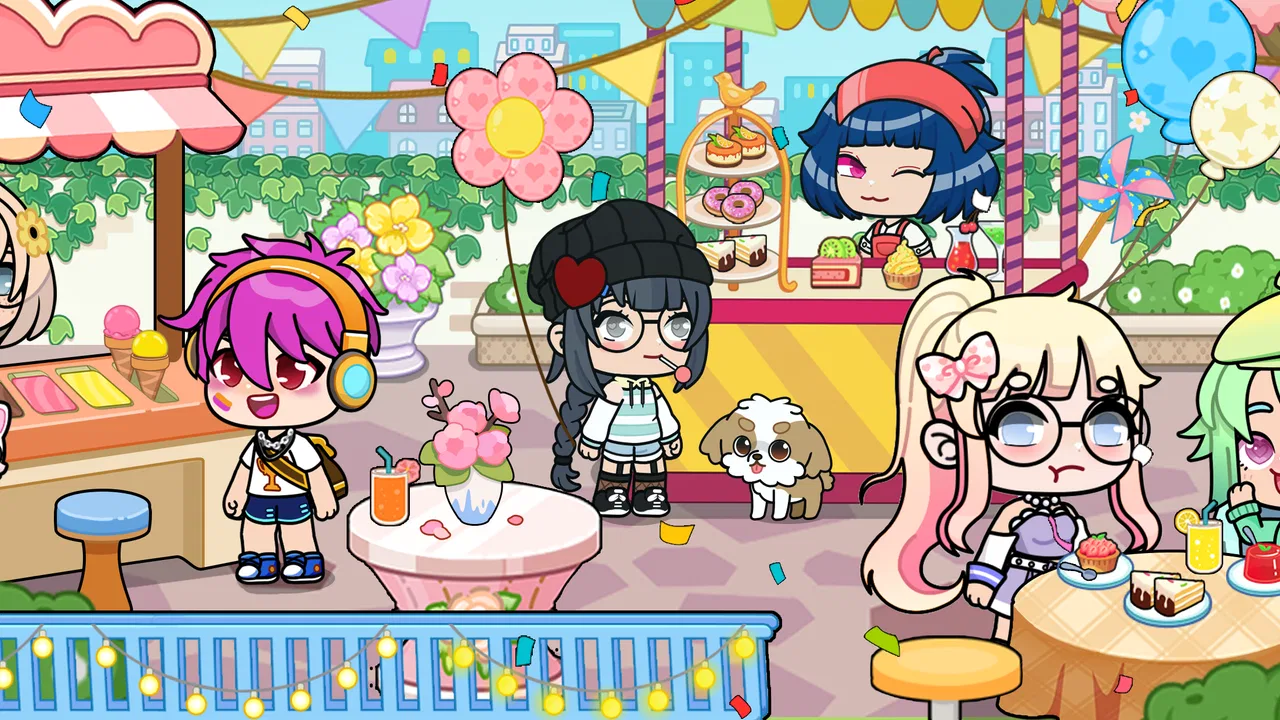
Super City2:Tut Life World
- 4.5
- Rating
- 10.00M
- Installs
- Free
- Price

 Analysis by App-foxy
I approached Super City2:Tut Life World as a role-playing game for players who enjoy shaping a small world at their own pace rather than chasing a demanding combat challenge. Its central appeal is easy to understand: you get a playful setting where you can design, build, and make over places such as a home, hospital, and school. After spending time with it, I found that its strongest quality is the freedom to turn simple locations into personal little scenes.
The game is free to download and is suitable for Everyone, which makes it an easy recommendation for families looking for something approachable. It comes from Hainan Hengdou Network Technology Co., Ltd., and its broad audience is reflected in its average rating of 4.5 from around twelve thousand ratings. With over ten million installs, it is clearly not an obscure experiment, although popularity alone does not guarantee that its relaxed style will suit every player.
How to Decide Whether This Life-Simulation RPG Fits You
The first question I would ask is what you want from a role-playing game. If you expect character statistics, long quests, tactical battles, or a dramatic story, this is probably not the right starting point. The experience is much closer to a creative town sandbox: the enjoyment comes from arranging spaces, imagining routines, and making ordinary locations feel lived in.
You May Also Like

 Blood Strike: 2.5 Anniversary
Blood Strike’s Loadouts Turn Every Drop Into a Tactical Gamble
A close look at Blood Strike’s custom loadouts: how fast access to signature weapons reshapes its battle royale rhythm, rewards preparation, and narrows the gap between fights.

 Pandora - Music & Podcasts
Pandora’s Music Is Easy to Start, but Harder to Recover
Pandora’s strength is its low-effort path from a seed to a station. Its weak spot is how much confidence it asks you to place in connection, setup, and quiet recovery.

 8 Ball Pool
 Is Built on Rivalries, Rematches, and Routine
A close look at the rivalries, rematches, shared routines, and unanswered safety questions that turn a quick pool match into a persistent mobile community.

 Samsung Music
’s Quiet Strength Is Playing What You Already Own
Its reach comes less from spectacle than from dependable access to a personal library. That simplicity is both the app’s strongest retention engine and its ceiling.

 AccuWeather: Weather Radar
AccuWeather Review: A Quick, Clear Forecast for Everyday Decisions
For everyday plans, the best forecast is the one you can understand quickly. AccuWeather makes rain timing, radar, and local conditions easy to act on, with a few trade-offs.

 Hill Climb Racing
Why Hill Climb Racing Still Turns Crashes Into One More Run
A tiny car, a bumpy hill and one more upgrade: Hill Climb Racing keeps resurfacing because its simple chaos makes every near-miss feel personal.
More From Our News Desk
View All News


That distinction matters because the store category can create different expectations. Super City2 is listed as a role-playing game, but I would approach it as a light, open-ended world-building title. I spent more time thinking about how a location should look and what a character might be doing there than worrying about winning a fight or completing a difficult mission.
For a child, the appeal is immediate because the settings are familiar. A house, school, and hospital give players recognizable places to explore and personalize. For an adult, the attraction is more like digital dollhouse play. I could invent a small story, adjust the environment to match it, and then return later to continue that scene instead of starting from a blank screen.
The best decision criterion is whether you enjoy creating situations more than completing objectives. Players who like decorating, role-playing everyday routines, and experimenting with different arrangements will find more value here than players who need constant rewards or a clearly defined campaign.
A practical way to judge the game in the first session
I recommend beginning with one location rather than trying to reshape the entire town immediately. Choose a home, school, or hospital and give yourself a simple scenario. For example, you might treat the home as a shared family space, use the school to act out a normal day, and then connect the hospital to a small story about a character visiting a doctor.
This approach reveals the game’s real strength faster than random tapping. Instead of asking whether there is enough action, ask whether the spaces help you imagine different activities. If moving between locations and making up your own context feels satisfying, the game has a good chance of holding your attention.
It also helps to involve another player without turning the session into a competition. One person can decide what happens in the school while another arranges the home or hospital. That kind of shared storytelling is more suitable here than comparing scores, because the pleasure comes from the scene itself.
Who will enjoy the open-ended format
I see this as a good fit for younger players who want a gentle game with familiar environments, parents searching for a creative activity rather than a combat-focused title, and adults who enjoy casual world-building. It can also work well for someone who likes taking a short break and returning to an unfinished idea later.
The free entry point makes experimenting easy. You can try the basic experience without committing to a purchase, then decide whether the creative loop is worth continuing. The age rating of Everyone also makes it easier to consider in a shared family setting, though I would still let a child play with an adult nearby when purchases are possible.
Where Super City2 feels most convincing
The game wins when it turns ordinary places into prompts for imagination. A home is not merely a background; it can become the center of a family story. A school can be used for routines, friendships, or pretend lessons. A hospital can add a different mood and give your characters a reason to move through the town.
That variety is more useful than a single decorative room because it encourages connections between places. I found that the game became more interesting when I treated the town as one setting instead of viewing each location as an isolated screen. A character could leave one place, visit another, and give the whole session a loose sense of continuity.
Another strength is the low pressure. There is no need to master complicated controls before you can start experimenting. That makes the game approachable for players who may be put off by traditional role-playing systems. I could focus on the idea I wanted to create instead of learning a large set of rules first.
Its visual and thematic simplicity is also an advantage for casual play. The recognizable locations make it easy to invent a scenario quickly. If I only had a short amount of free time, I could still create a small moment rather than needing to remember a complicated plot or prepare for a difficult encounter.
Three useful habits that improve the experience
My first tip is to give each location a purpose before decorating it. Decide whether the home is calm, busy, messy, or formal; decide whether the school is focused on an ordinary routine or a special event; and decide what role the hospital plays in your story. A clear purpose makes each change feel meaningful instead of random.
My second tip is to build scenes around transitions. Rather than leaving every character in one place, imagine where they came from and where they are going next. This creates a simple narrative without requiring a formal quest system. It also helps you notice which locations complement each other and which ones you rarely use.
My third tip is to treat the town as a collection of reusable sets. You do not need to finish a perfect design in one sitting. I found it more enjoyable to make a modest arrangement, play out a short scene, and then adjust the space later when a new idea appeared. This prevents the creative side from feeling like a chore.
A fourth useful habit is to separate decoration from storytelling. First, make the space practical enough to understand. Then add the details that support the scene you want to play. If everything is changed at once, it becomes harder to tell which decisions actually improved the experience.
The trade-offs behind the free model
Super City2 costs nothing to start, but it includes in-app purchases ranging from $0.99 to $19.99 per item. That does not automatically make the game poor value, yet it changes how I would recommend it to a family. I would begin with the free experience and only consider spending after confirming that the player returns to the game regularly.
For children, purchase controls deserve attention because a creative game can encourage repeated requests for additional content. The safest approach is to agree on boundaries before handing over the device. A free game is most useful when the family treats optional spending as a deliberate choice rather than part of ordinary play.
The trade-off is therefore straightforward: the no-cost entry makes discovery easy, while optional purchases may affect how complete or comfortable the experience feels for players who want more variety. I would not pay simply because the game looks charming. I would pay only if the available experience already proves that the player enjoys the underlying routine.
Where a different type of game may be better
Players who want a structured role-playing adventure should look toward a more traditional title. A game built around quests, combat, character progression, or a strong plot will provide clearer goals than this one. I would also choose that kind of alternative for someone who loses interest when there is no obvious next mission.
Players who mainly want decoration may prefer a dedicated interior-design or home-building game. Super City2 has a wider town concept, which is valuable for connected stories, but a specialized decorating experience may be more satisfying if the only goal is arranging rooms and refining visual details.
There is another important distinction from life simulators that focus on schedules, relationships, or resource management. Those games often reward long-term planning, while this one is better suited to immediate pretend play. If you want to manage a complex virtual household over many sessions, a deeper simulation may fit better.
Even within casual mobile games, the right alternative depends on the kind of friction you tolerate. A story-driven game gives direction but limits personal control. A pure sandbox gives freedom but may feel empty without self-made ideas. Super City2 sits between those approaches, using familiar public and private spaces to provide prompts without forcing a strict route.
What switching to this game involves
The cost of switching from a conventional role-playing game is not money so much as expectation. You may need to stop looking for missions, battles, or a final objective. The reward is the ability to decide what matters in the moment, but that freedom can feel like a lack of content if you prefer a game to guide every action.
Switching from a decorating game has a different cost. You gain more context because your designs can belong to a larger town, but you may spend less time pursuing one highly polished room. The game rewards breadth and imagination more than perfectionism.
Switching from a family-oriented life game can also change the way you play. Instead of following a fixed daily routine, you can create a situation and move on when the scene feels complete. That makes short sessions easier, but it may offer less satisfaction to players who enjoy watching systems evolve on their own.
The current version is 1.0.48, and the game requires Android 7.0 or later. That makes the compatibility question fairly practical: check the device’s Android version before downloading, especially if you are installing it on an older family phone or tablet. On a supported device, I would still leave enough storage and keep the system updated so the installation and future use are less frustrating.
A realistic everyday scenario
Imagine a rainy afternoon when a child wants something to do but is tired of fast action games. I would open the game and suggest creating a small town story. We might arrange the home first, decide that one character needs to visit the hospital, and then use the school as the next stop in the day’s pretend routine.
The adult does not need to control the story. A better role is to ask questions: Who lives in the home? Why is the character going to the hospital? What happens at school afterward? These prompts help the child use the locations creatively without turning the activity into a lesson.
For an adult playing alone, the same scenario can become a calming design exercise. I could set up a scene, make a few changes, and stop without feeling that I had failed to complete a level. That is where the game differs from many role-playing alternatives: a short session can feel finished because the imagined moment feels complete.
What to expect from the developer and audience
Hainan Hengdou Network Technology Co., Ltd. has positioned this release for a broad audience rather than a narrow group of expert role-playing fans. The combination of a free download, an Everyone age rating, and familiar locations supports that approach. I would describe it as accessible first and demanding second.
The audience response is substantial, with over ten million installs and an average rating of 4.5. I take those figures as evidence that the basic concept connects with many players, not as proof that every player will enjoy it. The important detail is whether you personally like open-ended play, because that determines the game’s value more than its popularity does.
My recommendation for different players
I recommend Super City2 to families seeking a gentle creative game, to children who enjoy making up everyday stories, and to casual players who prefer building a scene over defeating an opponent. I also think it is worth trying for anyone curious about a role-playing game that relies on familiar places and personal imagination instead of complex progression.
I would skip it if you need a strong plot, competitive goals, deep character development, or a clear checklist of objectives. I would also be cautious if optional purchases could become a problem in your household. The free download lowers the risk of trying it, but it does not remove the need to decide how spending will be handled.
My final view is positive, with a clear qualification: this is a creative town playground, not a conventional adventure RPG. Its homes, school, and hospital give me enough structure to invent scenes, while its open format leaves room for the player to decide what happens. If you want a relaxed game that lets you create the story, Super City2 is an easy one to try; if you want the game to provide the story for you, choose a more structured alternative instead.
FAQs for Super City2:Tut Life World
01What is Super City2: Tut Life World?
Super City2: Tut Life World is a casual life-simulation and role-playing game built around exploration, customization, and interactive storytelling. Players can visit different locations, create or style characters, arrange environments, and invent their own everyday scenarios. The experience is designed to be open-ended rather than focused on a strict campaign, making it suitable for players who enjoy imaginative play and relaxed activities.
02How do you play Super City2: Tut Life World?
Gameplay mainly involves exploring the available world, entering buildings or themed areas, moving characters and objects, and creating personal stories. You can experiment with outfits, locations, furniture, and character interactions to produce different scenes. There is generally no single correct way to play, so younger users can enjoy free-form activities while older players may appreciate designing detailed role-play situations.
03Is Super City2: Tut Life World free to download and play?
The application may be available as a free download, but the exact business model can depend on the Android or iOS version and the developer’s current release. Some content may be accessible immediately, while additional characters, locations, items, or features could require in-app purchases or advertising. Before installing, check the official store listing for pricing, subscriptions, ads, and purchase information.
04Is Super City2: Tut Life World safe for children?
The colorful presentation and creative gameplay may appeal to children, but parents should still review the app’s age rating, privacy details, advertisements, and in-app purchase settings before allowing independent use. Store descriptions and permissions can change with updates. For younger players, it is advisable to enable parental controls, restrict purchases, and supervise online or device activity when necessary.
05Does Super City2: Tut Life World require an internet connection?
Some parts of Super City2: Tut Life World may work without a constant internet connection, particularly basic exploration and offline interactions, but this can vary by version and device. Internet access may be needed for downloading the game, loading advertisements, restoring purchases, receiving updates, or accessing certain content. Test the installed version in airplane mode to confirm which features remain available offline.
Pros
- Large collection of locations
- outfits
- and characters to explore.
- Creative sandbox encourages storytelling and imaginative roleplay.
- Simple touch controls are accessible for younger players.
- Offline play is useful when traveling or without an internet connection.
- Frequent activities provide variety beyond basic room decoration.
Cons
- Some items and areas may require extra purchases to unlock.
- The large number of objects can feel overwhelming at first.
- Limited character interactions may reduce long-term depth for older players.
- Ads or promotional prompts can interrupt the play experience.
- Performance may vary on older phones and tablets.

Super City2:Tut Life World
Gallery